Belgium lifting the World Cup in 2026 is not a promise anyone can make in a sport as unpredictable as football. But if you’re looking for a team with a realistic, high-upside path to the trophy, Belgium has a compelling case: proven world-class leaders, a new generation of pace and creativity, and the kind of depth that matters even more in the expanded 2026 tournament.
This article breaks down the biggest reasons Belgium can win the 2026 World Cup, highlights key players to know, and explains what makes this squad one of the world’s most dangerous when it hits peak form.
Belgium’s winning formula: elite leaders + explosive youth + tournament depth
World Cups are rarely won by a single superstar. They’re won by teams that combine three things:
- Match-winners who decide tight games
- Structure that holds up under pressure
- Depth to survive injuries, suspensions, fatigue, and tactical chess matches
Belgium checks each box. The squad blends established stars who have played the biggest matches in European football with a wave of younger players bringing pace, pressing, and directness. In a 48-team World Cup (which increases the need for rotation and game-management), that mix becomes a genuine competitive advantage.
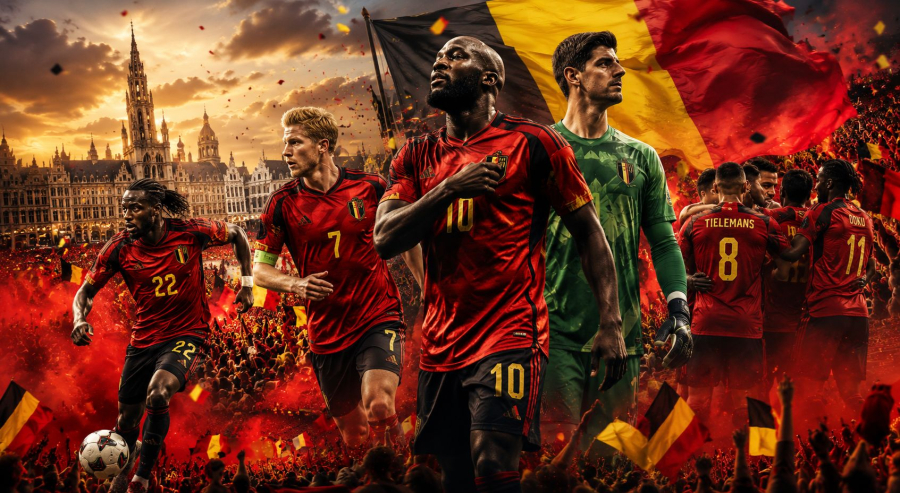
Reason #1: Belgium still has world-class match-winners
Tournament football is defined by moments. One perfectly weighted pass, one reflex save, one ruthless finish. Belgium has players who can produce those moments even when the game is tight and the margin for error is tiny.
Kevin De Bruyne: the game-breaker in midfield
When Belgium needs control, precision, and a final-ball that splits a defense, Kevin De Bruyne is the profile every national team wants. His ability to create chances from open play, set pieces, and transitions gives Belgium multiple ways to score, which is vital in knockout football where opponents often defend deep.
Romelu Lukaku: a proven international scorer
Romelu Lukaku brings something that travels well in World Cups: a forward who can convert limited opportunities. Belgium’s attack looks different depending on the opponent, but having a striker who can finish quickly, occupy center-backs, and create space for runners makes the entire system more dangerous.
Thibaut Courtois: a goalkeeper who can win a tournament game
In World Cup knockout rounds, goalkeepers can be the difference between going home and going on.Thibaut Courtois has shown across the biggest club stages that he can deliver match-defining saves. A team with a top-level goalkeeper gains a crucial edge in tight games, especially when facing high-quality shots from elite opponents.
Reason #2: The next wave gives Belgium pace, unpredictability, and pressing power
To win a modern World Cup, you need more than control. You need players who can stretch the field, attack space, and turn defensive moments into immediate danger. Belgium’s younger core provides that energy and unpredictability.
Jeremy Doku: acceleration that changes the matchup
Jeremy Doku adds a direct, 1v1 threat that forces opponents to adjust their defensive shape. In tournament football, where teams often prioritize structure and compactness, a winger who can beat his man and create chaos is priceless.
Loïs Openda: speed and runs that open defenses
Loïs Openda offers a different kind of threat to complement a more physical striker profile. His pace, movement, and ability to attack the channel can punish teams that push up or lose concentration for a single moment.
Charles De Ketelaere and Leandro Trossard: technique and versatility
International football rewards flexible attackers who can play multiple roles depending on the opponent.Charles De Ketelaere and Leandro Trossard bring the kind of technical quality and positional versatility that helps Belgium adapt within matches without making disruptive substitutions.
Amadou Onana and Youri Tielemans: balance in the engine room
Teams that go deep in World Cups usually have a midfield that can both protect the defense and launch attacks.Amadou Onana brings athleticism and ball-winning presence, while Youri Tielemans provides passing range, composure, and the ability to progress play. That blend helps Belgium control rhythm, recover quickly in transition, and keep the team stable under pressure.
Reason #3: Belgium can match different styles, which is how you survive a World Cup
The World Cup is a stylistic obstacle course. You might face a low block one match, a high press the next, and then a transition-heavy opponent in the knockout rounds. Belgium’s player pool supports multiple approaches:
- Control and chance creation through a top-class passing midfielder and technical attackers
- Direct threat through runners in behind and wide 1v1 specialists
- Physical presence through a strong center-forward option and robust midfield profiles
- Game-state management through experience across elite European competitions
That adaptability matters because no team wins a World Cup playing only one way for seven matches. Champions solve different problems on different days.
Reason #4: Tournament experience is a real asset, and Belgium has it
Belgium has spent years among international football’s elite, including a third-place finish at the 2018 World Cup. While each tournament is its own story, that history matters because it reflects a national team culture that understands:
- How to handle high-stakes knockout pressure
- How to win when you’re not at your best
- How to prepare for quick turnarounds and tactical adjustments
A squad that blends experienced leaders with hungry, high-ceiling talent often hits the sweet spot for a title run.
Reason #5: Depth will matter even more in the 2026 format
The 2026 World Cup expands to 48 teams, and while the exact path can vary, the broader point remains: more matches and more logistical complexity typically reward teams that can rotate without losing quality.
Belgium’s advantage is that it can field lineups with international-level quality across multiple positions, allowing for:
- Smarter rotation to maintain intensity
- Fresh legs for pressing, counterattacks, and late-game surges
- Tactical substitutions that genuinely change the game, rather than simply replacing tired players
Key Belgium players to know (and why they matter in a World Cup run)
Below is a practical snapshot of key players who help explain Belgium’s upside. Roles can vary by system and opponent, but these are the types of contributions that win tournament matches.
| Player | Position (typical) | What they bring | Why it matters in 2026 |
|---|---|---|---|
| Kevin De Bruyne | Midfielder | Elite chance creation, passing, tempo control | Unlocks compact defenses and delivers decisive moments |
| Romelu Lukaku | Striker | Penalty-box presence, finishing, physical matchups | Gives Belgium a reliable scoring focal point |
| Thibaut Courtois | Goalkeeper | Match-winning saves, big-game mentality | Turns close knockout games in your favor |
| Jeremy Doku | Winger | 1v1 dribbling, pace, unpredictability | Breaks open structured defenses and creates chaos |
| Leandro Trossard | Forward / winger | Versatility, technique, finishing, link play | Flexible solutions across different game plans |
| Loïs Openda | Forward | Runs in behind, speed, pressing threat | Stretches defenses and punishes high lines |
| Youri Tielemans | Midfielder | Composure, passing range, progression | Improves control and connects defense to attack |
| Amadou Onana | Midfielder | Athleticism, duels, ball-winning | Raises defensive stability and transition control |
| Timothy Castagne | Full-back | Work rate, balance, two-way play | Supports both defensive solidity and wide attacks |
| Arthur Theate | Defender | Physical defending, aerial ability, aggression | Helps in knockout football where set pieces matter |
| Wout Faes | Defender | Duels, commitment, defending the box | Key for protecting leads and surviving pressure spells |
Why Belgium “can be the best”: what separates contenders from champions
Saying “we are the best” is emotionally satisfying, but World Cups demand proof over slogans. Belgium’s strongest argument is that it can win games in multiple ways, which is what champions do.
1) Multiple routes to goals
Belgium can score through:
- Creative passing and late runs from midfield
- Wide isolation and 1v1 wing play
- Penalty-box finishing and second balls
- Set pieces created by sustained pressure
When one route gets blocked by an elite opponent, having alternatives keeps Belgium dangerous across the entire match.
2) A defense-and-goalkeeper foundation that travels
In international tournaments, clean sheets and controlled concession of chances are a superpower. With top-level goalkeeping potential and defenders capable of competing physically, Belgium has the foundation to win the low-scoring games that decide titles.
3) The ability to shift gears
Champions don’t play at one speed. Belgium can slow matches down to protect a lead, then accelerate through transitions and wide play when it’s time to strike. That ability to change tempo is one of the most underappreciated traits in tournament success.
A realistic, winning 2026 storyline for Belgium
If Belgium goes all the way in 2026, the storyline is easy to imagine because it matches how modern tournaments are won:
- Group stage: Use squad depth to rotate and stay fresh while building rhythm
- Early knockouts: Lean on structure, maturity, and efficiency in front of goal
- Quarterfinals and beyond: Win one or two “fine margins” matches through a decisive De Bruyne pass, a clinical finish, or a Courtois masterclass
- Final steps: Blend experience and youthful fearlessness, with game-changers off the bench
That is not fantasy. That is a blueprint built from the same ingredients that have fueled recent international champions: decisive quality, tactical flexibility, and depth that holds up as the tournament gets heavier.
Conclusion: Belgium has a true World Cup ceiling in 2026
Belgium’s case for winning the 2026 World Cup comes down to a simple, persuasive truth: this team can produce match-winning moments, sustain pressure with quality, and adapt across different opponents and match states.
With leaders like Kevin De Bruyne, Romelu Lukaku, and Thibaut Courtois, plus high-impact talent like Jeremy Doku, Loïs Openda, Leandro Trossard, Amadou Onana, and Youri Tielemans, Belgium has the profile of a champion: not just good, but built to win the games that decide the trophy.
In 2026, the question won’t be whether Belgium has the talent. It will be whether Belgium turns that talent into seven complete performances. If it does, the World Cup is absolutely within reach.
